
Restaurant Work, ADHD, Dopamine: Why the Kitchen Is Where Your Brain Actually Thrives

Restaurant Work, ADHD, Dopamine: Why the Kitchen Is Where Your Brain Actually Thrives
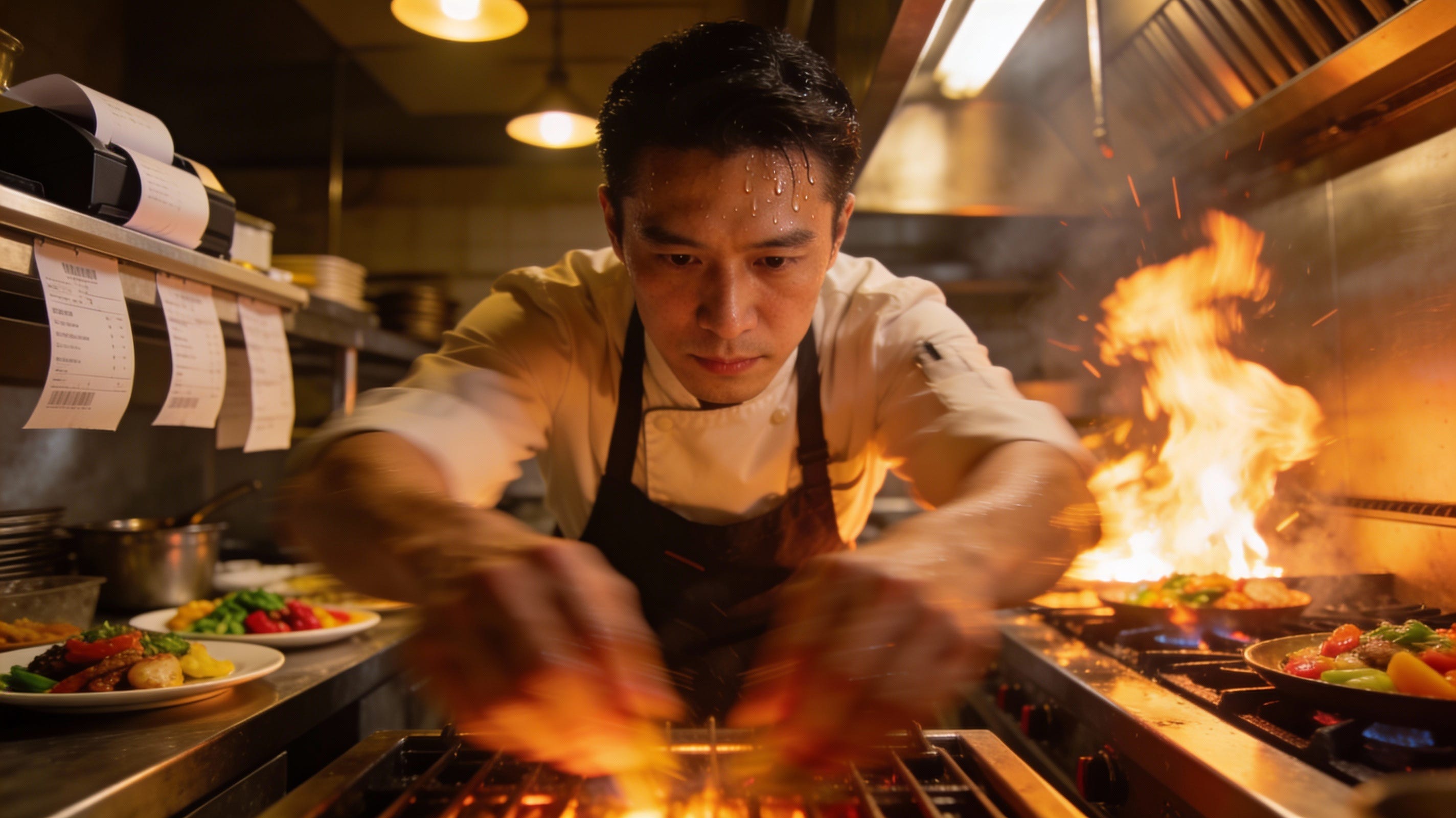
The moment the first ticket prints, your nervous system shifts. Your perception narrows. The clatter of pans, the heat, the constant flow of orders. This is where people with ADHD don’t struggle. This is where they excel. The restaurant kitchen is one of the few high-pressure environments where ADHD doesn’t look like a deficit. It looks like an advantage.
This isn’t romance. It’s neurology.
The Dopamine Deficit Nobody Talks About
To understand why ADHD thrives in kitchens, first understand what’s happening in their brains.
ADHD isn’t about a lack of focus. It’s about a dysregulated dopamine system. Research from a 2009 study in JAMA shows that adults with ADHD display reduced dopamine transporter availability in the striatum and nucleus accumbens, the brain regions controlling motivation and reward processing. This isn’t a character flaw. It’s a neurochemical reality. The ADHD brain requires significantly higher stimulation to release dopamine, the neurochemical that drives motivation, attention, and the ability to initiate effort.
Think of dopamine like your brain’s currency for motivation. Most people’s brains release dopamine in response to completing tasks or meeting deadlines. The ADHD brain rarely does. Instead, dopamine is released in response to four specific conditions. The four are novelty, interest, challenge, and urgency. For people with ADHD, motivation doesn’t follow importance. Motivation follows stimulation.
This explains why someone with ADHD might struggle for hours to organize email but then hyperfocus for six uninterrupted hours on a project that engages them. It’s not laziness. It’s neurochemistry. The task itself doesn’t trigger dopamine release, so the brain doesn’t mobilize effort. When a task hits the right dopamine triggers, the same person becomes unstoppable.
The restaurant kitchen is engineered to activate all four dopamine triggers simultaneously.
The Kitchen As A Dopamine Machine
Service is unpredictable. No two nights run the same way. The tickets come in at different volumes. That’s novelty. The chaos itself is the fuel.
Restaurant work provides immediate feedback every second. You taste the food. You see the ticket. You hear whether a plate is correct. You watch the garnish land. The feedback loop is relentless and real, not theoretical. For the ADHD brain, this immediate, tangible feedback triggers dopamine release more reliably than almost anything else in most jobs.
Challenge and competition are built into the structure. A full ticket board is a puzzle. 210 covers in a night is a competition with your own speed, with your team, with time itself. Research shows that workers with ADHD perform better and report higher satisfaction in stimulating work with challenge, novelty, multitasking, fast-paced activities, and physical labor. The restaurant kitchen delivers all of this in one shift.
Urgency. There is always urgency. A ticket is an immediate demand. A guest complaint requires an immediate response. The pressure is relentless and real. For the ADHD brain, urgency doesn’t feel like stress. It feels like purpose. It triggers dopamine.
Spencer Horowitz, a San Francisco Chef who worked at Michelin-starred restaurants, describes this exactly. He struggled with ADHD throughout his career until he recognized one truth. Understanding his ADHD was the key to becoming the Chef he wanted to be. After cognitive behavioral therapy and coaching from fellow Chefs with ADHD, Horowitz became an executive Sous Chef at a Michelin-starred restaurant. He didn’t fight his neurology. He structured his work around it.
The irony is brutal. The ADHD brain struggles most in the environments that neurotypical people find easiest. The quiet, structured, routine, low-pressure work. It thrives most in the environments that neurotypical people find most stressful.
Hyperfocus: The Overlooked Strength
Most people hear “hyperfocus” and think it means intense concentration. That’s close but incomplete. Hyperfocus is actually a state of attention regulation so deep that everything else vanishes. The world outside the task genuinely fades. You lose track of time completely. It’s not chosen. It’s involuntary.
Hyperfocus triggers specifically when a task hits dopamine thresholds. The ADHD brain doesn’t hyperfocus on boring things. It hyperfocuses on things that trigger interest, novelty, challenge, or urgency. For people in kitchens, this means that during service, particularly during high-volume service, hyperfocus is almost automatic. The tickets are novel. They’re challenging. They’re urgent.
What neurotypical people experience as chaos and stress, the ADHD brain experiences as the perfect condition for deep, sustained focus. A line cook with ADHD during a full Friday night service often becomes more focused, not less. The higher the volume, the deeper the hyperfocus.
Kitchen workers with ADHD describe this repeatedly in forums and discussions. They struggle before service with prep work and setup, but the moment service begins, everything clicks.4 One commenter captures it: “The way is to learn to turn ‘the kitchen has to be running as well as possible’ into your hyperfixation for the shift, and then you just react to whatever is happening.” Once a person with ADHD is confident enough to get into their zone without overthinking, they move plates faster than their peers.
The Cost Of The High: Why This Advantage Becomes A Trap
Here’s the part nobody tells you: the kitchen can become addictive to someone with ADHD precisely because it’s the only place where their brain works the way they want it to.
The constant stimulation masks the underlying dopamine deficit. When a person with ADHD is in the kitchen during service, their symptoms nearly disappear. They feel normal. They feel capable. They feel like the best version of themselves. The moment they leave that environment, the deficit returns. Sitting at a desk to do scheduling, inventory, or bookkeeping becomes nearly impossible again. The mundane tasks of running the business. The parts that require sustained attention without external pressure. These parts become absolute torture.
This creates a dangerous pattern. Operators, Chefs, Sous Chefs with ADHD often excel at the chaos of service but struggle with the administrative components of leadership. They might be extraordinary cooks, but terrible Managers of their own time or their staff’s schedules. They hyperfocus on the immediate (tonight’s service) and miss the strategic (next month’s inventory or staffing). Restaurants become unsustainable.
Additionally, the physical and emotional intensity of kitchen work on an ADHD brain is real. Even though the high-stimulation environment triggers performance, it also depletes emotional reserves. The constant input, the pressure, the noise. These are all overstimulating. People with ADHD in fast-paced environments often work harder than their neurotypical peers in a desperate attempt to maintain performance levels. Over months or years, this leads to burnout that looks sudden but is actually the result of chronic overstimulation.
Executive dysfunction doesn’t disappear in the kitchen. It just becomes less visible. Time management deficits don’t vanish. They’re masked by external urgency and structured timers. Organization challenges don’t disappear. They’re managed by the kitchen’s controlled setup. Working memory problems don’t disappear. They’re supported by written tickets and immediate feedback.
Remove those supports, and the deficits return instantly.
Building Sustainable Systems That Actually Work
Many Operators with ADHD have learned to work with their neurology rather than against it. They’ve discovered practical systems that reduce friction and amplify their strengths.
Horowitz outlined several of these directly. Don’t be hungover (basic daily functioning, eating, drinking water, directly impacts focus). Write your prep list twice (once to capture everything, once to prioritize by cook time and sequence). Practice mindfulness when distracting thoughts arise (return to the current task rather than spiraling). Don’t pull the ladder up behind you (teach others to overcome problems rather than gatekeeping).
Beyond personal strategies, the most sustainable restaurants with ADHD staff members have also learned to structure their environments around dopamine-driven motivation rather than fighting it.
This Means:
Breaking larger tasks into smaller, immediately rewarding segments. Instead of “prep station,” make it “prep station part one: setup” followed by “prep station part two: vegetable prepping.” Each completion triggers a small dopamine release. Kitchen staff with ADHD report that timers are essential, not just for cooking food, but for managing their own attention. Setting a timer for 25 minutes of work followed by a 5-minute break aligns work rhythm with their dopamine cycles.
Creating visible organization systems that reduce decision-making and working memory demands. Color-coding prep lists and labeling each task with priority and cook time reduces cognitive load. Using timers on a smart watch to track multiple cooking tasks simultaneously works. These aren’t add-ons. For ADHD brains, they’re essential accommodations that make the difference between success and failure.
Designing stations and workflows that minimize context-switching penalties. One of the biggest ADHD vulnerabilities is the difficulty of switching between tasks. Every switch requires the brain to reload the context of the new task. For people with ADHD, this reload takes significantly longer and costs more attention. Intelligent kitchen design that allows workers to complete related tasks in sequence, rather than constantly moving between different areas and different types of work, dramatically improves performance.
Building in frequent feedback and recognition. Dopamine is triggered by achievement and by the anticipation of achievement. Regular, specific feedback (”You got those plates out 30 seconds faster tonight”) is far more motivating than a single bonus at the end of the month. Teams that implement real-time recognition, a shout-out in the pass, a brief acknowledgment, a tally on a dry erase board, maintain higher engagement from ADHD staff.
Creating protected quiet time during slow periods. While ADHD brains thrive on high stimulation, they also need recovery time from overstimulation. Many experienced Kitchen Managers with ADHD staff have learned to protect lower-volume periods not as opportunities to rush prep but as legitimate recovery time. This prevents the cascade into burnout.
The Broader Reality: ADHD And Sustainable Restaurant Work
The restaurant industry’s turnover crisis is well-documented. In 2025, the average restaurant employee turnover rate is approximately 75%. In Seattle specifically, 82% of restaurants have indicated they will raise menu prices and 74% will reduce staff hours in response to rising labor costs, with 77% of Operators citing recruitment and retention as their top concern.
What’s not well-documented is how many of these turnover statistics are actually people with undiagnosed or unsupported ADHD. The behavioral patterns that mark someone as a problem employee. Inconsistency, lateness, forgotten tasks, emotional volatility under stress are often classic ADHD markers. The person isn’t lazy or irresponsible. They’re unsupported.
The restaurant industry’s traditional culture of yelling, shaming, and emotional intimidation doesn’t work for ADHD brains. It makes things worse. When someone with ADHD is already in a nervous system state of overload, external pressure and criticism activate the fight-or-flight response, which further impairs executive function. The very management style that has dominated restaurant kitchens actively worsens ADHD symptoms.
This is changing. Slowly. Smart restaurant Operators are recognizing that supporting neurodivergent staff members, whether through formal diagnosis or simply through understanding ADHD traits, improves team performance. One Executive Chef with ADHD describes how understanding his dopamine system enabled him to develop management practices that work for all staff, including making tasks clear, creating immediate feedback loops, and eliminating unnecessary sources of stress. His Michelin-starred kitchen operates with less yelling and significantly better retention than the industry standard.
What This Means For Your Restaurant Right Now
If you operate a restaurant, especially in a high-pressure environment, you employ people with ADHD, whether you know it or not. The labor shortage that defined 2025 means you’re competing fiercely for staff retention. Understanding ADHD becomes a practical business strategy, not just kindness.
Your highest-energy, most adaptive staff members during service might also be your most scattered during slower periods. Rather than seeing this inconsistency as unreliability, recognize it as dopamine dysregulation. Create systems that support both their high-performance states and their lower-energy states.
Your staff member who forgets to check tickets or misses a detail might not be careless. They might have working memory deficits that are masked during high-volume service by the constant external feedback. Implement written systems, timers, and visible task boards. These aren’t babysitting. They’re tools that allow their brain to function at their best.
Your person who hyperfocuses on one task and forgets everything else isn’t being stubborn. They’re experiencing the neurobiological reality of how their attention system works. Rather than punishing this, redirect it. Use their hyperfocus capability for high-value tasks that require sustained attention.
If you’re a restaurant worker with ADHD, the goal isn’t to perform like a neurotypical person. It’s to perform like the version of yourself that emerges when your environment aligns with your neurology. Write your prep lists. Use timers. Organize your station visually. Ask for immediate feedback. Understand that the intensity you feel in the kitchen is real, and the crash afterward is real too. Build recovery time into your schedule. Don’t stay in a restaurant that yells at you. The industry now has alternatives to abuse, and neurodivergent workers deserve them.
If you’re considering restaurant work and have ADHD, understand what you’re stepping into. The restaurant will feel like the most natural environment on earth to you. The stimulation will feel like home. This is real, and it’s legitimate. Understand that this same stimulation can lead to burnout if you don’t actively manage recovery and if the restaurant’s culture is built on emotional punishment. Find Operators who understand neurodiversity. They exist. They’re building restaurants that work.
The Future Of Restaurant Work Is Neurodiversity-Aware
As restaurants face labor shortages that force operational rethinking, a genuine opportunity emerges. The industry can stop relying on the chemical high of chaos and crisis to motivate staff. It can build systems that work with how human brains actually function, including the 5% to 10% of the population with ADHD who often feel most alive in the kitchen.
This isn’t soft. It’s the opposite of soft. It’s clear-eyed recognition that dopamine-driven motivation is real, that ADHD brains process urgency and stimulation differently, and that the restaurant kitchen is one of the few places where this particular neurology doesn’t look like a problem. It looks like an asset.
The Chefs and Operators who understand this, who build restaurants around how their actual staff actually think, rather than how they wish staff would think, will be the ones who retain people in 2026 and beyond. The ones who build sustainable, high-performing teams instead of cycling through broken people looking for the next kitchen that feels like home.
#ADHD #RestaurantWork #KitchenLife #Neurodiversity #DopamineDriven #HospitalityLeadership
The restaurant industry’s best Operators have stopped pretending their staff are neurotypical. They’re building kitchens that work with how people actually think. If that sounds like the move you want to make, follow along for free.