
I Spent Two Months on the Wrong Two People

I Spent Two Months on the Wrong Two People
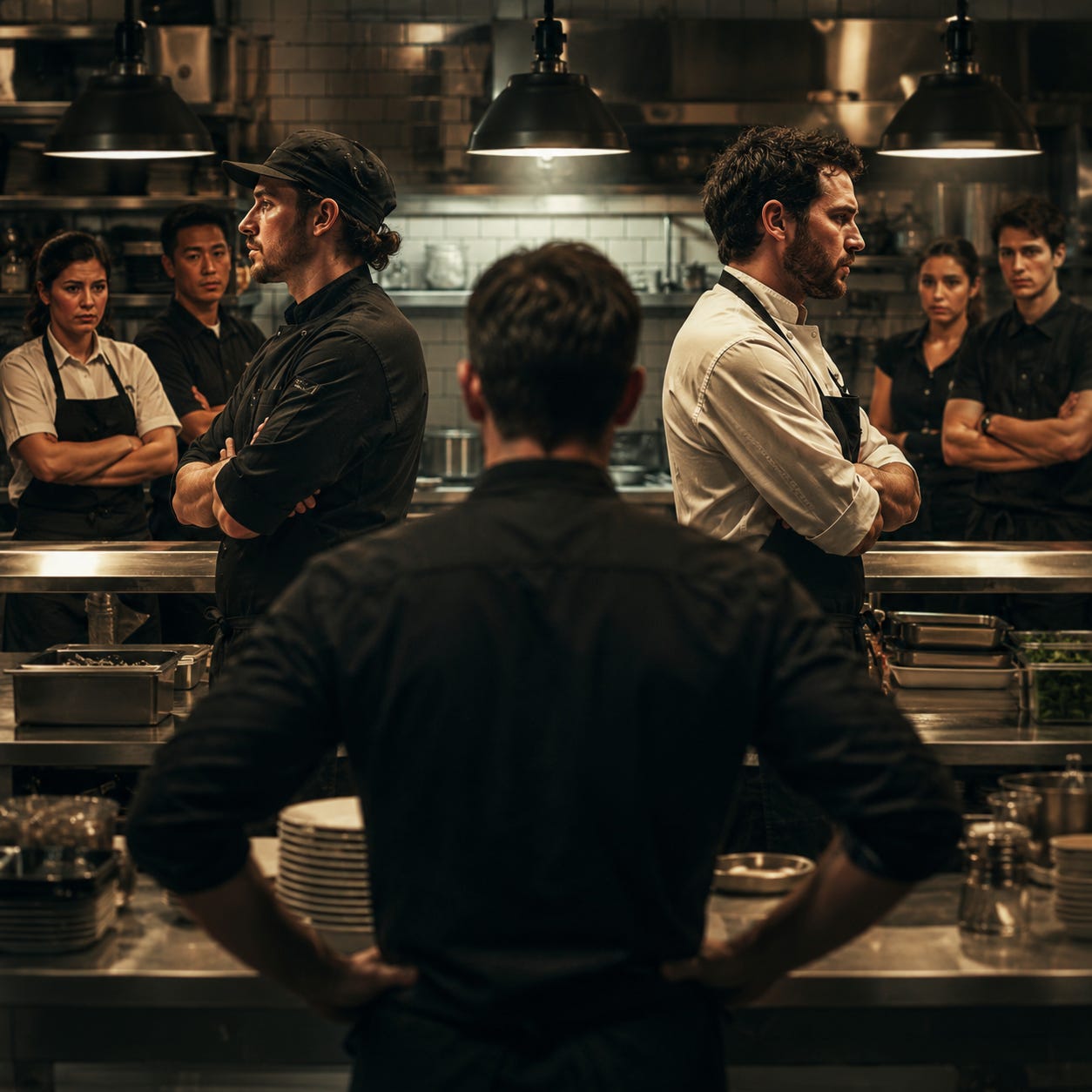
I managed a conflict between two of my best people for eight weeks. The whole time, the six people who had nothing to do with it were quietly paying for it. I kept looking at it wrong.
At some point on a Friday night, my Expo stopped relaying tickets the normal way. I didn’t notice for 20-minutes. Then I saw what was happening. She invented a workaround because two people at the center of my service weren’t talking directly anymore. A course sat cold in the window for 11-minutes while the floor worked around a relationship problem I would have to solve.
I spent 8-weeks trying to fix it and was still no closer to a solution.
What I Tried
I had the conversations. Separate first, then together. Explained the impact, asked for professionalism, got two people who said the right things. They went back on the floor and found quieter ways to make each other miserable. I sat them down before a Tuesday lunch and spent 45-minutes in the middle of something that ended with both of them angrier than when they walked in.
A Manager I’d worked with had a different approach. When two of his people were feuding, he’d sit them at a table and tell them they weren’t getting up until they had a plan for working together. Structured. Specific. End with a handshake. 70% of the time it worked. The other 30% it either kicked the problem down the road for 3-weeks or made things worse. It brought everything to the surface with nothing real underneath it, and they’d walk out with more ammunition than they’d walked in with. Mediation research puts success rates around 70%. What it doesn’t track is whether those agreements are still holding six months later.
Both his approach and mine were aimed at the same type of situation between two people who can’t work together. Mine, however, had six others waiting on the outcome either way.
Who Was Actually Paying
The Servers weren’t saying anything. A Server, who had been at the restaurant for 12-years, found me at the end of a shift and said she felt like she was walking on eggshells. She didn’t name names. We both knew. What she was really telling me was that my problem had become her problem, and she was tired of carrying it.
My Pantry Cook had started timing his breaks around which one of them was on the floor. My Expo was fielding questions that should have gone straight to the line. A table would flag the Manager about a course, and instead of walking to the pass, she’d route it through the bus station to have someone else ask. 30-seconds extra. Five or six times a service. Every time, someone at a table noticed something was off without being able to say what.
Two newer hires were doing what you do in your first few months: watching the veterans to read the real rules of the place. The rules they were picking up were that conflict got avoided here instead of being handled. I’d spent 8-weeks trying to fix two people and didn’t notice what I was teaching everyone else. Research from the Myers-Briggs Company found that employees spend more than 4-hours a week dealing with conflict, and that clock runs for everyone working around it, not just the two people in it. That was my restaurant.
What I Didn’t Understand Soon Enough
People who study team conflict call it conflict contagion. A dispute between two people moves through a team in stages. Others start taking sides. The emotional charge spreads to the people who tried to stay out of it. They don’t decide to get involved. The mood shifts. They adapt to it the way a kitchen adapts when the printer starts backing up. Nobody calls a meeting. Everyone just moves differently.
My Pantry Cook was already inside it. So was my Expo. They weren’t choosing to carry something that wasn’t theirs. They were adjusting to a pressure that had been in the restaurant so long it felt like the restaurant. By the time I did something that actually helped, my whole team had already restructured their shifts around the conflict.
What I Changed
I stopped trying to fix what was between them. I started trying to figure out two things. What do those two have to do together for the service to function? Also, what protects everyone else while I work on the longer problem?
For these two, it came down to three things. The Manager needed to know about delays before the tables found out. The Cooks needed to know what the floor was dealing with, pacing changes, anything affecting timing. Direct communication across the pass, in real time.
A 90-second check-in at the start of each service. Nothing beyond what the shift needed. I didn’t ask them to work through what went wrong between them. I asked them to do three specific things and told them plainly I didn’t care how they felt about each other while they were doing it.
The first week was professional and nothing more. Some nights, that’s what it stayed. On better nights, something loosened. They stopped spending energy on each other and put it back into the work. A few weeks in, the Manager called a pacing change to the line without being prompted. The Cooks adjusted. Service held.
The team felt it before I did. My Pantry Cook stopped engineering his breaks. The Expo went back to running normal calls. The tentured Server started talking to the line the way she had before any of this started. The newer hires stopped scanning the room every time those two were in the same section.
What I’d Gotten Backwards
I’d been treating the conflict as the problem that had to be resolved before the team could get back to normal. The team couldn’t wait for that. They’d been waiting weeks already.
My colleague’s sit-down method works more than it fails, so I’d keep it in the toolkit. What it can’t do is protect the rest of the team while you’re waiting to find out which outcome you got. The 70% still takes time, and the 30% makes everything worse. The team is inside it the whole time, regardless.
If you’re managing this right now, ask yourself how long the people around that conflict have been absorbing it while you’ve been focused on the two. Figure out what those two have to do together for the work to run, and build the structure that makes that unavoidable.
The relationship problem might take months. The team needed you last week.
I write about what happens in restaurants and what you can do to run them better. Follow along for free.
#RestaurantManagement #HospitalityLeadership #FoodServiceLeadership #KitchenCulture #RestaurantOperations #Restaurant101
Lesson learned