
I Finally Understand Why We Keep Setting Our Restaurant Managers Up to Fail

I Finally Understand Why We Keep Setting Our Restaurant Managers Up to Fail
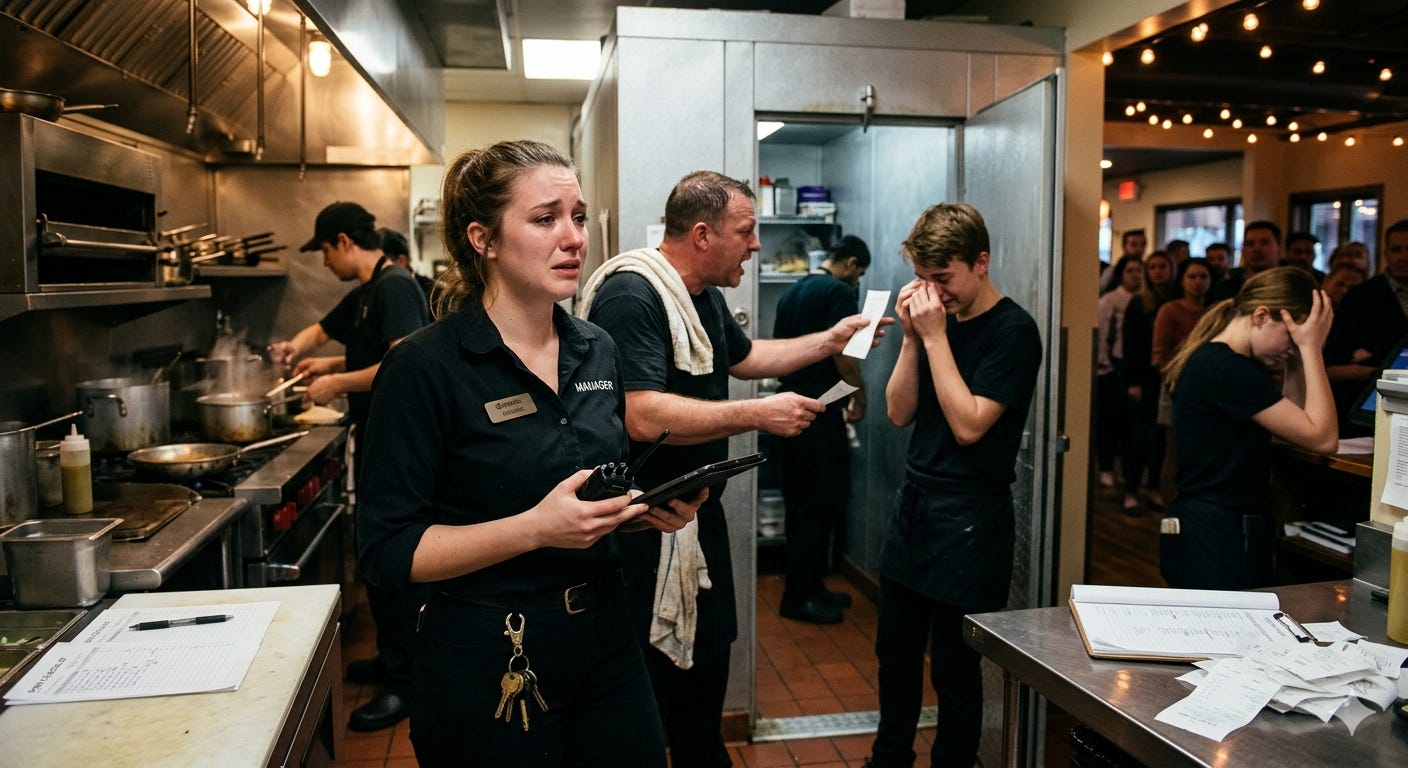
I watched a new Manager run her first Saturday night with four days of training behind her.
She was good. Composed under pressure, read the room, moved the floor with her eyes. By 8 pm, she had a server in tears in the walk-in, a line cook threatening to walk over a ticket dispute, and a host who stopped seating because she hit a wall. The Manager handled all of it. Barely. But she handled it.
After close I asked how she felt.
She said it was like being thrown out of a plane and told to figure out the parachute on the way down.
She was not wrong. That’s exactly what we did. The worst part is that we call it training.
What The Numbers Say When You Actually Compare
A new Branch Manager at a bank completes 12 to 16 weeks of structured training before she has solo accountability for a team. Compliance requirements demand it. A manufacturing Floor Supervisor gets 8 to 12 weeks, minimum, before he touches a production line independently. Documented sign-offs before anything moves.
A new Manager at the average independent restaurant gets about 7 to 10 days. The average Sous Chef stepping into a leadership role gets less. The National Restaurant Association puts industry turnover at roughly 75%. Those two facts are not unrelated.
I’ve been on both sides. I’ve handed keys to Managers I knew weren’t ready because I needed a body. I’ve been the Manager who wasn’t ready when someone handed me the keys. Neither felt good. The industry has decided that’s just how it is, and most of us stopped questioning it.
We Train People For The Job On A Good Day
That’s the thing I got wrong for years. Most restaurant training is task-based. Here’s the POS. Here’s the opening checklist. Here’s how we run line checks. Walk the Manager through the systems for a week and call it done.
I had a Manager, two years with me, who told me something I’ve thought about since. He said the training taught him everything about how the restaurant worked when it was working. Nobody ever showed him what to do when it wasn’t. The walk-in that breaks mid-shift. The District Manager who reverses a call in front of the staff. The Thursday when the kitchen falls apart, and the guests can see it.
That’s the job. The tasks are the easy part. The training stops exactly where the actual management begins.
We prepare people for normal conditions. Then, normal conditions break, and we discover the Manager has no framework for it. Then we write them up for it. That sequence plays out in hospitals with residents who passed every exam and freezes the first time a family falls apart in the hallway. It plays out in sales organizations with first-time Team Leads who knew the deal was going south and couldn’t handle the first time a deal fell apart publicly. It’s not a restaurant problem. It is a preparation problem. We just happen to be especially committed to ignoring it.
The Exposure Nobody Talks About At The Pre-Shift
Restaurants carry serious liability. Food safety law. Alcohol liability. Harassment exposure. Wage and hour regulations that can shut down an operation overnight. We hand that exposure to someone with four days of training and move on.
The Manager who was never trained on harassment policy is the one signing the disciplinary paperwork when something happens. The Sous Chef who doesn’t understand labor law is the one approving the schedule that creates the violation. When it breaks, the Manager is exposed. Not the Owner who handed them the keys.
Banking has compliance floors. Healthcare has credentialing requirements. Aviation has documentation chains that go back years. Those industries built those structures because the cost of skipping them became undeniable. Restaurants have absorbed the cost differently. We pay for it in turnover. We pay for it in lawsuits. We pay for it in managers who quietly stop doing things by the book because nobody ever told them what the book said.
What Forty-Five Days Actually Buys You
Not forty-five days of shadowing. Forty-five intentional days with a plan written down before they walk in. If you can’t describe what success looks like at the end of week one, you’re not training them. You’re hoping.
Put them in every role in the building for the first two weeks. Not to master it. To understand what the people they’ll manage are actually doing. A Manager who has never stood at the Expo Station on a Friday makes assumptions that a Manager who has stood there doesn’t make.
The part that almost always gets skipped is weeks five and six. Financials. Scheduling. The HR basics that protect both of them when something breaks. That’s where most owners stop. It’s also what determines whether the manager can run the restaurant or is just surviving the shift.
The Ten-Minute Conversation Almost Nobody Has
The training plan gets them to week six. What keeps them developing after that is simpler, and almost nobody does it.
After close. Standing at the bar or in the office doorway. Not a formal review.
What happened tonight? What did you handle well? What would you do differently? What do you need from me that you’re not getting?
Ten minutes. Done consistently in the first thirty days, that conversation compresses development faster than any manual. It also signals something that matters more than the information exchanged. It tells the manager their growth is being taken seriously. That one signal changes how they show up on the next shift and the one after that.
I skipped this for years. I thought sharp managers would figure it out on their own, and the ones who couldn’t were probably wrong for the role. That thinking cost me good people. Managers who absorbed blow after blow with nobody debriefing them, nobody naming what happened, nobody helping them build a framework for next time. They burn out or they leave. Both felt like their problem at the time. They weren’t.
The Thing That Isn’t An Accident
Some Owners keep Managers slightly undertrained on purpose. Most wouldn’t say it that way. A Manager who doesn’t fully understand food cost methodology is easier to blame when the numbers are off. A Manager who doesn’t know HR law is harder to push back on when the Owner wants to handle something his way.
Undertrained Managers maintain a power dynamic that some Owners depend on without knowing they depend on it. The Manager senses the gap. They start second-guessing decisions they should own. They stop making calls and start trying to predict what the Owner wants.
That isn’t management. It’s a different job. Nobody told them it was the actual job.
The Owner complains that the Manager isn’t taking initiative. The Manager stopped taking initiative because the last three times they did, the Owner reversed the call without explanation. Both frustrated. Neither one can name what’s happening. The restaurant runs worse every month, and neither person understands why.
You can’t build a prepared Manager inside an environment that punishes preparation. That’s the audit nobody wants to do. It usually points back at the Owner.
Write down what a successful first thirty days looks like for a new Manager before you post the job. Not a job description. A map. Day seven. Day fourteen. Day thirty.
If you can’t write it down, you’re not going to train it. You’re going to hand them the keys and call what happens next their fault.
The manager from that Saturday night stayed for a year. She was good at the job and getting better. She left because the Owner kept reversing her calls in front of the staff and nobody could explain why. She told me on her last day that she would have stayed forever if anyone had actually been in her corner.
I think about that a lot. The preparation was there by then. The environment wasn’t. Both matter. We tend to only fix one.
Try something different Monday.
I write about what actually happens in restaurants and what you can do to make it better. Follow along for free.
#RestaurantManagement #KitchenCulture #FoodServiceLeadership #HospitalityIndustry #RestaurantOperations
I can't get over how I've never done any service work, know nothing about this subject, and your posts keep dragging me in because they're about running...anything. Any group of people.
Like so many, I watch "The Pitt" for the "Competence Porn", the pleasure of seeing real competence and cool problem-solving. I just got to the S1 episode where the big shooting disaster comes in, and they were all so prepared with their wristbands and tags and procedures and the experienced guys leading the suddenly-scared-looking docs that hadn't been through one before. I almost wanted to cry, it was so beautiful.
But, yeah, any other workplace getting those "what if" drills and procedures budgeted - and the budget holding not being cancelled, if the disaster doesn't happen for a year or so - is a dream.
Military and medical people get this training. In Waterworks infrastructure, you'd think so, but when a huge pipe burst, or when the flood came, we made it up as we went along.
Crisis Management can not be taught, you sink or swim. That said if it happen to often, then its a policy issue and or the owner. They ask for to much with out support, good assistant Managers are must in larger venues. Just trying to keep theft in check is dam near a full time job.
Its not a job for the weak