
Chef Keith Corbin Trained Himself To Believe The Kitchen Was Fair. That Belief Was The Whole Strategy.

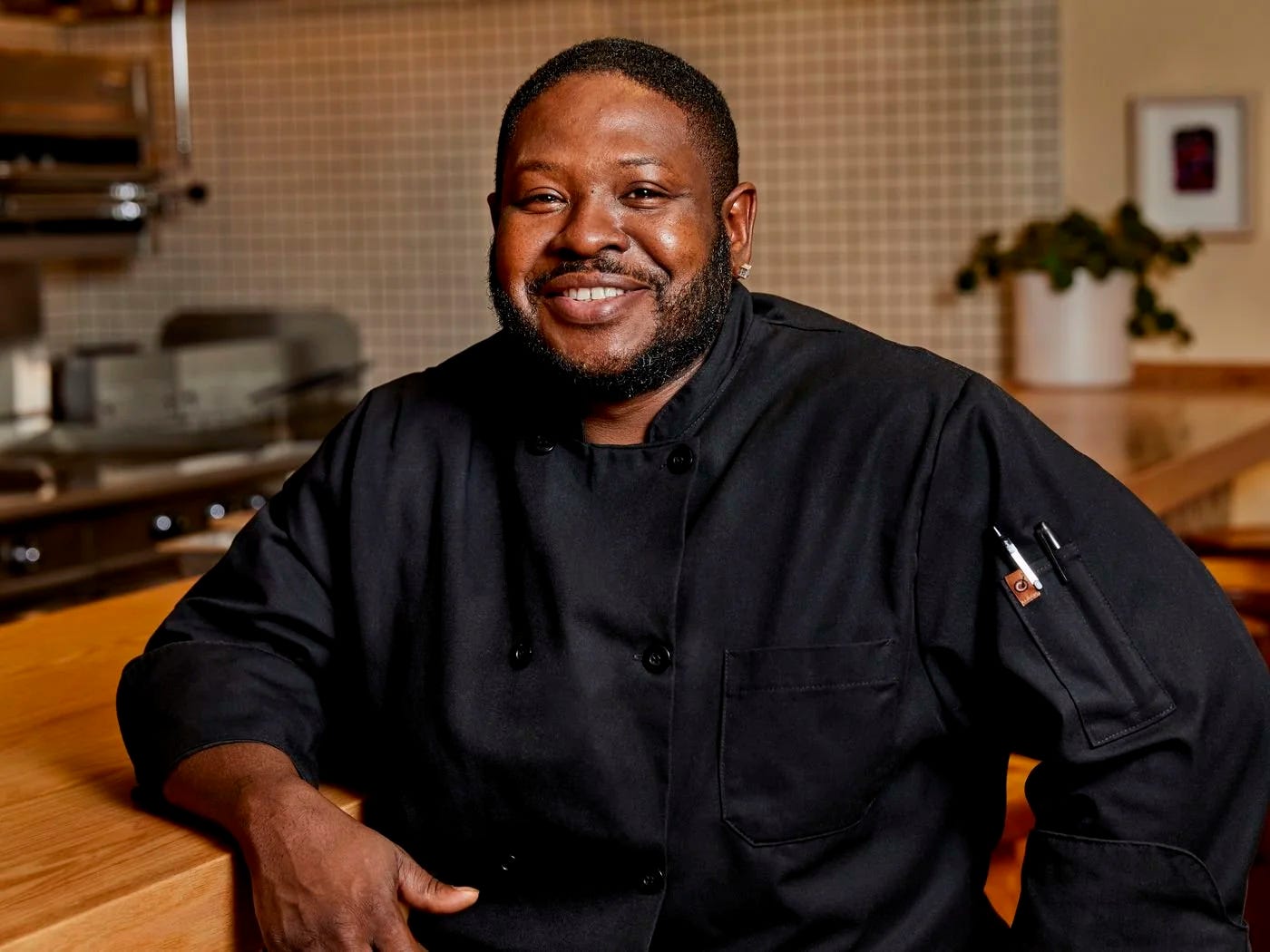
Chef Keith Corbin Trained Himself To Believe The Kitchen Was Fair. That Belief Was The Whole Strategy.
Keith Corbin grew up in Jordan Downs in Watts, did time, and entered his first professional kitchen with one idea holding everything together. If you work hard enough, this place will be fair to you. His book, California Soul, details what he found out instead.
Growing up, Corbin said the drug game and gang culture were simply part of his life and his family. He says, “There was no other network to plug into.” This is the kind of thing that’s obvious to anyone who lived it and invisible to everyone who didn’t.
He’s explained it plainly, “I grew up in the projects, and it’s a gang and drug infested area and there’s no opportunity, there’s no jobs, there’s no resources, no income, no support. You gotta get out there and make ends meet. And you can only act off what you know.”
He went to prison three times for a total of ten years. When he got out, the idea of a clean break was still available to him. He wanted it. He tried for it.
Finding a job that would hire an ex-convict was almost impossible. When he did find work at the Chevron oil refinery in El Segundo, they fired him abruptly when they found out he had a felony record.
That’s the moment worth sitting with. He did exactly what the system told him to do. He got out. He found legitimate work. He started over. The system closed the door anyway. The kitchen wasn’t his first choice for a clean escape. It was what was left.
What The Kitchen Asked Him To Carry In
Corbin has described the weight he brought into those early professional kitchens directly, “I come from a community of poverty and systems that target you. And trauma, and loss. You get this aggressiveness about you. You get this untrusting about you. You get this unwillingness to work with people. You get this habit of solving problems a certain way. You have trust issues. There’s a lot of things that hinder you from actually succeeding in life and in the real world. And so I have to overcome a lot of those things.”
He’s been specific about that weight in a way that costs something to say publicly. Most people in his position don’t.
His creative instincts didn’t come from training. He’s said his creative mind when it comes to cooking comes from poverty. “You have to take what’s available and create something to make it palatable.” He learned that in his grandmother’s kitchen. Deepened it in prison. Brought it into professional kitchens that had no framework for understanding where it came from or what it had cost him to develop it.
The Job That Changed The Frame
After the Chevron firing, his mother told him about a new restaurant that was about to open. Corbin says he noticed a “we’re looking for help” sign while walking by a new restaurant opening in Watts called LocoL. It was an ambitious, heavily hyped restaurant meant to bring inexpensive, chef-quality meals into underserved neighborhoods by Chefs Roy Choi and Daniel Patterson. He walked in and got hired as a manager.
The food he could do. He’s laughed about it in interviews: “Prison cooking didn’t prepare me for this, growing up cooking didn’t prepare me for this — cooking drugs didn’t prepare me for this.” He figured it out anyway. He was good.
Then the media found him.
Once LocoL launched, people noticed what Corbin could do. He was suddenly thrust into the spotlight. He struggled to live up to or accept the simplified “gangbanger redemption” portrayal of him in the media. The story they wanted had a specific shape. Gang past. Prison. Redemption. Kitchen. Clean arc. Packaged for sharing. What it left out was everything that didn’t fit. The addiction he still fought. The violence that was still being absorbed from the neighborhood around him. The fact that a spotlight doesn’t stop whatever was chasing you before it turned on.
Corbin has said he wanted to reclaim the narrative. “Through my narrative, I wanted to offer hope and encouragement to those who may find themselves in similar circumstances.” That’s a different ambition than confirming the story someone else decided to tell about you.
What The Book Actually Says
He didn’t write a meritocracy story.
Alta Adams opened in 2018. Esquire named it one of the best new restaurants in the country. The LA Times kept it on their best restaurants list. The Hollywood Reporter called it Black Hollywood’s top restaurant. Two James Beard nominations. California Soul landed on the LA Times bestseller list and got optioned for television.
The success is real. The book is still not a success story.
California Soul takes readers through gang hierarchies, drug dealing, prison politics, and gentrification. Corbin tells the story of what it’s like to grow up Black in America under some of the worst circumstances. To get locked up. To get locked up again. To attempt to go straight. An unforgiving system. To find a culinary passion. To go for it. To succeed. To fail. To be forced to fight for your place at the table.
He was forced to fight for his place at the table. Meritocracy doesn’t ask you to fight for your place. It gives you one proportional to the work. What Corbin describes is a system where the work is real. The talent is real. You still have to fight. The system has its own weight that individual effort seldom outpaces.
The weight is specific and documented. Corbin has said publicly, “I own a successful business, but I still can’t get a small business loan.” In October 2023, he sought a certificate of rehabilitation from the Los Angeles County Superior Court. This is a court order formally stating that someone convicted of a felony has significantly rehabilitated and led an honest and upright life. It doesn’t erase the record. It just improves the odds of being treated fairly.
A James Beard-nominated chef. Co-owner of a nationally celebrated restaurant. Still navigating a system designed to keep working against him.
What He Tells Kids From Where He Came From
Corbin goes back. He speaks at schools. Mentors youth from underserved communities. Shows up to talk to eighth graders about what it actually took.
He’s direct with them about what the usual advice misses. “A lot of times people want to tell you to keep dreaming, keep your head up, go to school, think big — those people don’t come from where we come from. They don’t know how hard it is.”
He’s not telling kids the system is fair. He’s telling them to keep pushing anyway. Eyes open. There’s a difference in what matters enormously to someone trying to navigate the real world rather than the inspirational poster version of it.
He’s described his relationship to his roots plainly. “No matter how high my tree grow, or where it bends and hovers over, my roots are always in the same place.”
He didn’t leave. He went back and built something there. When LocoL relaunched as a nonprofit, he said the vision was to inspire change, challenge the conventional norms of the fast food industry, and prove that access to nutritious and affordable food can be a reality for all. This is from someone who understands what structural deprivation looks like and decided to build a concrete response to it.
The Line That Changes Everything
After being eliminated from CBS’s America’s Culinary Cup earlier this year, Corbin said, “I am someone who grew up with less than other people. I come from Watts. I overcame the gangs, prison, poverty; I didn’t go to culinary school. My introduction to the kitchen was survival. If I inspire one person where I come from, I’ve won.”
Corbin’s introduction to the kitchen was survival. That’s the whole reframe. Millions of workers enter restaurants every year carrying the version Corbin used to believe. They believed that the work determines the outcome, that the restaurant doesn’t care where you came from, that talent is enough. That belief keeps people absorbing things in silence they shouldn’t have to absorb alone, because the framework tells them absorption is just what hard work looks like.
Corbin owns a celebrated restaurant and still can’t get a small business loan. If he’s still fighting for his place, the question worth asking is who the system was actually built for and whether anyone running kitchens right now is willing to say so out loud.
I write about the restaurant industry. What actually happens inside it. What the conventional stories get wrong. What people are building anyway. Follow along for free.
#RestaurantIndustry #KitchenCulture #FoodServiceLeadership #ChefLife #HospitalityIndustry #Restaurant101
Second chance, job re-entry programs for formerly incarcerated individuals deserve our support. The people involved in these efforts are doing true life-changing work.
“Corbin owns a celebrated restaurant and still can’t get a small business loan. If he’s still fighting for his place, the question worth asking is who the system was actually built for and whether anyone running kitchens right now is willing to say so out loud.”
Silent outrage